
Someone diagnosed with Head and Neck Cancer every day in NI
There is an increasing number of Head and Neck Cancer cases in NI* and, on average, someone is diagnosed every day. Between 2009 – 2020 Head and Neck Cancer survival did not improve* and research plays a vital role in discovering better ways to prevent, diagnose and treat cancer.
Members of the NI Cancer Research Consumer Forum (NICRCF)** Head and Neck Cancer Subgroup know first-hand the impact of cancer and they have joined forces with local researchers to co-produce a series of videos to help raise public awareness during April – Head and Neck Cancer Awareness Month.

David Rodgers, Patient Advocate, Co-Chair of the Head and Neck Cancer Subgroup, leads panel discussion at ‘Reels Research and Partnership,’ event in Queen’s Film Theatre, 27 March 2026
David Rodgers, Patient Advocate and Co-Chair of the Subgroup, describes his experience; ‘It started with an ulcer on the left side of my tongue, initially small and a bit irritating but I thought it would settle. I had a routine dental appointment about a week later and my dentist examined it carefully and took a photograph. She didn’t like the look of it, so she brought me back a week later to check if it was healing and when it wasn’t she referred me red flag to the maxillofacial clinic in Craigavon. At the clinic I was advised that it probably was cancer and they did a biopsy. I was a non-smoker and only had the occasional glass of wine.
What started in that dentist’s chair was a path of care and treatment for which I am extremely grateful. Referral, biopsy, scans, surgery to take a part of my tongue and the nodes out of the left side of my neck ended with a diagnosis of squamous cell carcinoma with no spread. All good, or so I thought.
I went back to work, made a career change and was really enjoying my new job when I started getting pain in the left side of my head – especially when chewing. A scan showed that my tumour was back in the floor of my mouth. Six weeks of chemoradiotherapy followed, during which I lost my swallow so had to be fed through a tube into my stomach for a number of weeks.
Since then, I have been carefully followed up and now, eight years later, I am involved in providing patient and public involvement (PPI) in research which is seeking to improve the outcomes for future patients. Through the Northern Ireland Cancer Research Consumer Forum** we also seek to raise awareness of the symptoms of head and neck cancer. It is a privilege to be involved in this important work.’
What to look out for
Early detection of Head and Neck Cancer will significantly improve patient outcomes. Data 2013-2017* indicated five-year survival was 85.2% for Head and Neck Cancer diagnosed at stage 1, compared to 29.5% if stage 4 at diagnosis.
Professor Gerry McKenna, a Consultant in Restorative Dentistry and Prosthodontics at Belfast Trust and Queen’s University Belfast explains; ‘It’s important to know the signs and symptoms of Head and Neck Cancer and what to look out for.
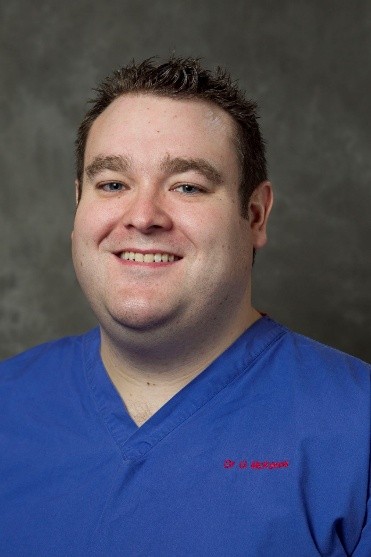
Prof Gerry McKenna, Consultant in Restorative Dentistry & Prosthodontics, Belfast Trust and Queens’ University Belfast.
Each cancer type presents slightly differently, which means there are a number of potential signs and symptoms to be aware of.
Early detection is essential.
Symptoms can include an ulcer anywhere in the mouth lasting for more than 3 weeks, any lumps on the face or neck that won’t go away, a sore tongue that’s not getting better and red or white patches inside the mouth. Other signs can be difficulties or pain with chewing, swallowing and speaking, bad breath, throat pain or persistent hoarseness, and unexpected weight loss.
Attending for routine dental check-ups is so important. Dentists have a key role to play in picking up the signs and symptoms of head and neck cancer.
We’ll review your medical history, discuss potential risk factors and perform a head and neck examination -every time you attend for check-up -to assess any signs of suspected cancer; and we’ll refer you to appropriate services, where needed.
Early detection and knowing what signs and symptoms to watch out for is so important.’
If you have any concerns about possible symptoms of Head and Neck Cancer, talk to your dentist who will treat this with the utmost importance. Early detection can save lives and will result in a better prognosis.’
HPV vaccination can prevent some Head and Neck Cancers
Many people have heard that Human Papillomavirus (HPV) is linked to cervical cancer, but it is less well known that it causes some types of Head and Neck Cancer. HPV is now “the fastest growing risk factor for head and neck cancers”. *** The good news is that there is a vaccine that protects against the high-risk types of HPV so getting the vaccine is a simple step that can prevent a serious disease.
The importance of partnership in cancer research
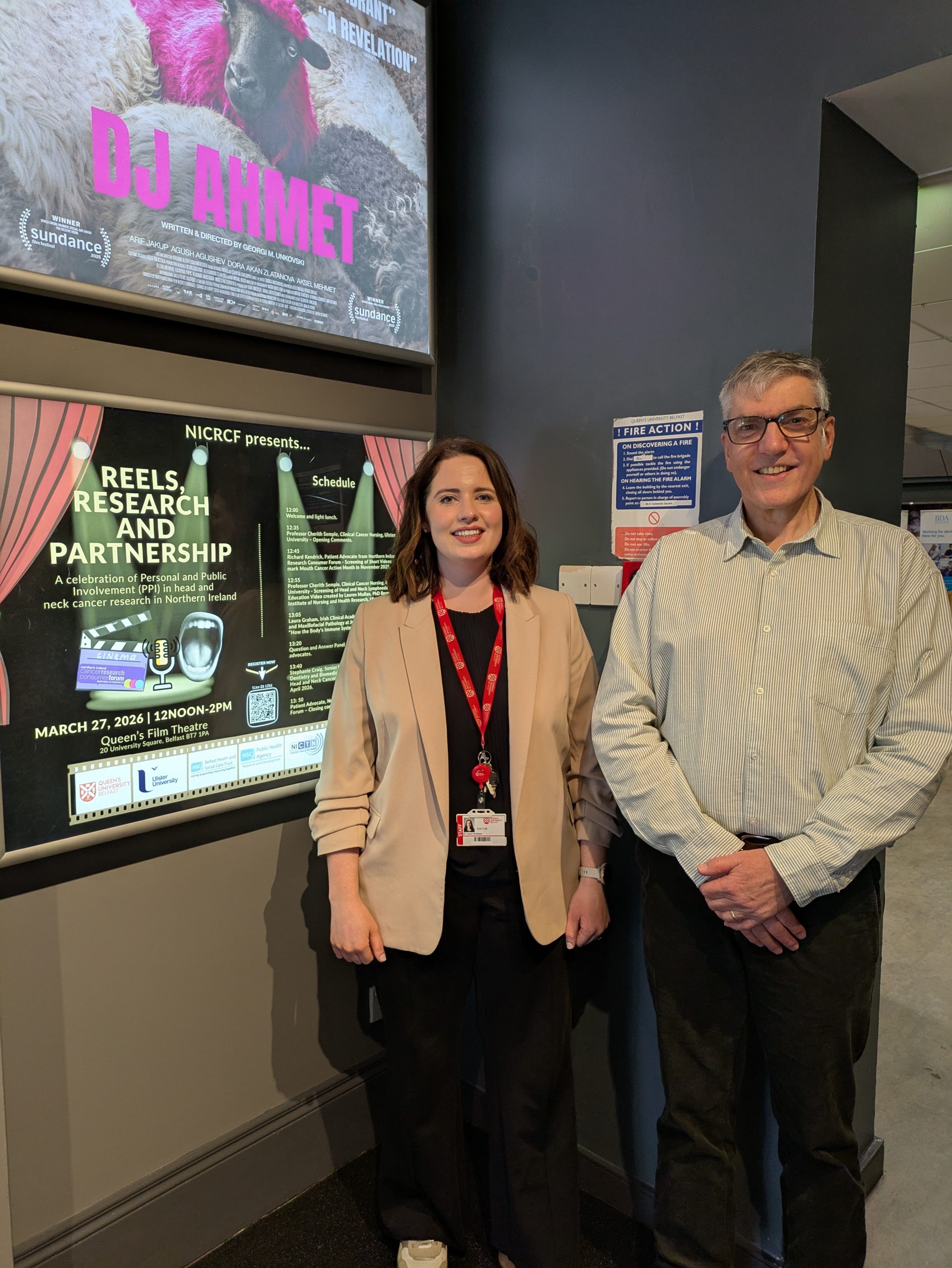
Researcher Laura Graham, QUB and Patient Advocate David Rodgers at the Reels, Research and Partnership Event in Queen’s Film Theatre, Belfast
Sharing the message about Head and Neck Cancer and how to prevent it and detect it is very important to the members of the Northern Ireland Cancer Research Consumer Forum** Head and Neck Cancer Subgroup. David Rodgers highlighted that the impact of the group extends beyond research; ‘As part of our commitment to raising public awareness about head and neck cancer, we were fortunate to work in partnership with local researchers to develop a series of public awareness videos, which were launched at a showcase event “Reels, Research and Partnerships” in Queen’s Film Theatre, Belfast for Head and Neck Cancer Awareness in April.’ The public are urged to view and share the videos.
*NI Cancer Registry: Head and neck cancer report.pdf
**The Head and Neck Subgroup of the Northern Ireland Cancer Research Consumer Forum (NICRCF) is a group of patients and carers who work in partnership with researchers to improve cancer research in Northern Ireland and beyond.
If you have been affected by head and neck cancer or would like more information on the group visit our website: https://cancertrials.hscni.net/about-us/ni-cancer-research-consumer-forum
***Oracle Head & Neck Cancer UK Charity Human papillomavirus (HPV) – Oracle Head and Neck Cancer UK
Additional Information:
Patient Support: Head, Neck and Throat Cancer | Cancer Focus NI
For more information about Head and Neck Cancer see Macmillan Cancer Support: https://www.macmillan.org.uk/cancer-information-and-support/
Contact details:
David Rodgers: davidrodgersicp@btopenworld.com
Patient Advocate and NICRCF Head and Neck Cancer Subgroup Co-Chair
Professor Gerry McKenna: gerry.mckenna@belfasttrust.hscni.net
Consultant in Restorative Dentistry and Prosthodontics at Belfast Trust
Ruth Boyd: ruth.boyd@belfasttrust.hscni.net
NICRCF Head and Neck Cancer Co-Chair, NI Cancer Trials Network (NICTN), Belfast Trust: 028 9615 2652